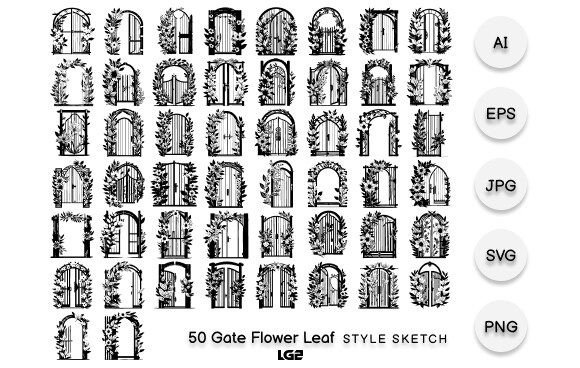
Gate Flower Leaf Element Draw Black
In the landscape of digital graphic design, the selection of vector assets plays a pivotal role in determining the final aesthetic and functional quality of a project. Among the myriad of available resources, the Gate Flower Leaf Element Draw Black stands out as a versatile and stylistically distinct option for designers seeking organic yet structured visual components. This asset is not merely a decorative clipart but a scalable vector illustration that offers precision and adaptability across various media formats. For professionals and hobbyists alike, understanding the technical specifications, application potential, and practical considerations of this element is essential before integrating it into a workflow.
Understanding the Asset: What Is Gate Flower Leaf Element Draw Black?
The Gate Flower Leaf Element Draw Black refers to a specific vector icon or illustration characterized by botanical motifs—specifically flowers and leaves—arranged in a composition that may evoke the structure of a gate or archway. The "Draw Black" designation typically implies a monochromatic, line-art style, often used for elegant, minimalist, or high-contrast designs. Unlike raster images, which are pixel-based and lose quality when scaled, this asset is built on mathematical paths, allowing it to remain crisp at any size. This makes it particularly suitable for applications ranging from small mobile app icons to large-scale billboard prints.
The core value of this element lies in its dual nature: it combines natural imagery with geometric stability. The floral and leafy components introduce an organic, soft feel, while the "gate" aspect suggests symmetry, framing, and entry points. This balance allows designers to use the element as a focal point, a border, or a subtle background texture without overwhelming the primary content of the design.
Technical Specifications and File Formats
One of the most significant advantages of purchasing or acquiring the Gate Flower Leaf Element Draw Black is the comprehensive range of included file formats. High-quality vector packs typically provide versatility, ensuring compatibility with different software ecosystems and output requirements. The standard inclusion of the following formats addresses nearly every professional need:
- Ai (Adobe Illustrator): The native format for Adobe Illustrator, preserving all editable layers, anchor points, and effects. This is ideal for extensive customization.
- Eps (Encapsulated PostScript): A widely supported vector format compatible with many desktop publishing programs, including InDesign and CorelDRAW. It ensures cross-platform compatibility.
- Svg (Scalable Vector Graphics): The standard for web design. SVG files are lightweight, code-based, and can be manipulated via CSS or JavaScript, making them perfect for responsive websites and interactive presentations.
- Png and Jpg (Raster Formats): While vectors are preferred for scalability, having pre-rendered raster versions is crucial for quick previews, social media posts, or projects where vector editing is not feasible. These are provided at a high resolution of 2000 x 2000 pixels, ensuring clarity even when zoomed in.
It is important to note that while the raster files (JPG/PNG) can be viewed and used directly, the vector files (AI/EPS/SVG) require a computer and design editing software to fully utilize their potential. Users must have access to programs that support these specific file types to extract, edit, or customize the colors and shapes within the Gate Flower Leaf Element Draw Black.
Practical Applications and Use Cases
The versatility of the Gate Flower Leaf Element Draw Black allows it to be integrated into a wide array of design projects. Its monochromatic black-and-white scheme makes it highly adaptable to various color palettes through simple recoloring in editing software. Below are common scenarios where this element proves to be a strong fit:
- Print Media and Editorial Design: In book covers, magazine layouts, or brochures, the intricate details of the flower and leaf elements add a touch of sophistication. The "gate" structure can be used to frame text or create section dividers, guiding the reader’s eye through the content.
- Fashion and Textile Patterns: For cloth design, the repeating nature of botanical elements works well in seamless patterns. The black line art contrasts sharply against light fabrics, creating a modern, chic look suitable for scarves, dresses, or packaging materials.
- Event Invitations and Stationery: Weddings, galas, and formal events often benefit from elegant, organic motifs. The Gate Flower Leaf Element Draw Black can serve as a border for invitations or as a watermark on thank-you cards, conveying a sense of exclusivity and refinement.
- Digital Presentations and Web Graphics: In PowerPoint or Keynote presentations, using vector icons helps maintain sharpness during projection. On websites, SVG versions of the element can be used as decorative headers or footer accents without slowing down page load times significantly.
Benefits and Tradeoffs
When evaluating the Gate Flower Leaf Element Draw Black, it is helpful to weigh its benefits against potential limitations to determine if it aligns with your specific goals.
Benefits
The primary benefit is scalability. Because it is a vector, you can resize the element from a favicon size to a banner size without any loss of quality. Additionally, the monochromatic design offers maximum flexibility; you can easily change the color to match brand guidelines or seasonal themes. The high-resolution raster backups also save time, eliminating the need to export files manually for quick-use cases.
Tradeoffs and Considerations
However, there are tradeoffs to consider. First, the requirement for specialized software means that users without access to Adobe Illustrator, Affinity Designer, or similar tools may find the vector files less accessible. While online editors exist, they often lack the full feature set of desktop applications. Second, the black-and-white nature, while elegant, may require additional effort if a designer is looking for ready-to-use colored illustrations. Finally, the complexity of the "draw" style might not suit projects requiring bold, flat, or cartoonish aesthetics. If the desired outcome is vibrant and playful, this minimalist element might feel too restrained.
Decision-Making Insights: Is It Right for You?
To determine whether the Gate Flower Leaf Element Draw Black is the right choice, consider the following questions regarding your project needs:
- Do you need scalability? If your design will appear on both print and digital platforms at varying sizes, the vector nature of this asset is a significant advantage over static images.
- What is your software proficiency? If you are comfortable editing AI or EPS files, you can unlock the full potential of the asset. If you rely solely on basic image viewers or simple photo editors, the PNG/JPG versions will suffice, but you will miss out on customization options.
- Does the aesthetic match your brand? Evaluate whether the elegant, linear, botanical style fits the tone of your communication. It is best suited for brands emphasizing nature, elegance, tradition, or minimalism.
In situations where a designer needs a quick, low-effort solution with no editing required, stock photos or pre-colored clipart might be more efficient. However, for projects demanding customizability, high-fidelity printing, or web optimization, the Gate Flower Leaf Element Draw Black provides a robust foundation. By leveraging the included multi-format package, designers can ensure that their visual assets remain consistent and professional across all touchpoints.
Conclusion
The Gate Flower Leaf Element Draw Black represents a thoughtful intersection of artistic expression and technical utility. Its inclusion of multiple file formats—from editable vectors to high-resolution rasters—caters to a broad spectrum of design workflows. While it requires appropriate software to fully exploit its capabilities, the resulting flexibility in scaling, coloring, and application makes it a valuable addition to a designer’s toolkit. Whether used for enhancing print materials, decorating textiles, or embellishing digital interfaces, this element offers a refined way to incorporate organic beauty into structured design frameworks. By carefully assessing your technical resources and aesthetic goals, you can determine if this asset aligns with your creative vision and project requirements.